


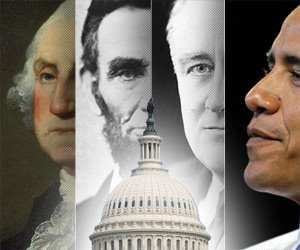
After spending decades in exile, people can't seem to shut up about John Maynard Keynes and FDR now. Paul Krugman (Princeton professor, NYT columnist, professional Bush-basher, and the most recent Nobel laureate in economics) is on a deficit spending bender on his blog,
here: http://krugman.blogs.nytimes.com/2008/11/10/fiscal-fdr/
here: http://krugman.blogs.nytimes.com/2008/11/08/new-deal-economics/
and here: http://krugman.blogs.nytimes.com/2008/11/08/stupid-fiscal-tricks/
Expect more of this as the pundits mull over the meaning of Obama's Friday press conference and his meeting today at the White House - and as they digest aid to the auto industry, new aid to AIG, and the massive stimulus package that China just passed.
I think this is good and bad. It's good because everything is on the table for the first time in a long-time. When the worst-case scenario is full-scale economic collapse, you don't want to rely solely on the solutions that were vetted by Barry Goldwater. It's bad because in our frenzy to respond to the recession we may exascerbate other "pre-existing conditions" - a $10.5 trillion dollar national debt with a deficit that may top $1 trillion in the first year of the Obama administration, coupled with wary international investors and growing entitlement spending. Krugman and a lot of the Keynesian crowd have been very cavalier towards deficit hawks in the last several weeks.
Their argument is disappointingly shallow: "bank failures are a real problem right now - the so called Treasury bubble is a theoretical problem projected to happen some time in the future". Their new-found confidence in deficit spending is good, in my mind, but their embrace of all deficits, no matter what the size or projected future cost, is disturbing. Moreover, Congressional Democrats may be emboldened by a Nobel laureate stamp of approval on massive spending increases.
Here's what we need to do - pick up the "General Theory of Employment, Interest, and Money", and reread it before we jump into anything. I did this last year and it looks like it would probably be smart to reread it again before January. The focus of the General Theory was productive employment and investment that would sustain employment temporarily, AND lay the foundation of an economic recovery. Keynes ridiculed politicians who were more than willing to pay unemployed workers to do nothing but balked at the idea of paying them to build public works that would speed an economic recovery. He also spent a lot more time talking about state management of investment than he did talking about state management of consumption. These sound like details, but it makes a big difference.
We probably do need to extend unemployment insurance - but before there's too much talk about expanding Medicaid or welfare or Medicare we need to instead consider grants to states that are now slashing transportation projects and teacher payrolls. If we hand out twice as many foodstamps as we did before, we're just going to relieve some of the pressure on family budgets and subsidize the food industry - but if we build new bridges and roads we relieve pressure on family budgets while at the same time setting a foundation for more robust economic growth to occur several years down the line. Same with "green-collar jobs" - now is the time for the government to start pilot programs in wind and solar energy that can relieve pressure on family budgets, but also position private enterprise to move into these areas when they become less skiddish about investing than they are now.
Keynes was right. Everybody accepts the basic Keynesian logic now (it's why Bush cut taxes in 2001, after all). But re-embracing Keynes and FDR doesn't mean you drive the country further into debt with whatever politically popular program you want. People like Paul Krugman need to reread what Keynes actually said before criticizing budget hawks like David Walker. Any progress we make with untargeted spending may unravel if the debt doubles again under Obama, like it did under George "Borrow and Spend" Bush.
Relevant Links:
On investing in American infrastructure -
1. http://www.brookings.edu/events/2008/0725_infrastructure.aspx
2. http://www.newamerica.net/programs/economic_growth/infrastructure#
On the real Keynes -
1. http://www.levy.org/vdoc.aspx?docid=1082
Crisis of 2008 News Referenced in this Note -
1. http://www.washingtonpost.com/wp-dyn/content/article/2008/11/10/AR2008111000502.html?hpid=topnews
2. http://www.washingtonpost.com/wp-dyn/content/article/2008/11/09/AR2008110900701.html?hpid=topnews
3. http://www.politico.com/news/stories/1108/15426.html
An Interesting New FDR Book That Someone Who Loves Me Oughta Get Me for Christmas -
1. http://www.amazon.com/Traitor-His-Class-Privileged-Presidency/dp/0385519583/ref=pd_bbs_sr_1?ie=UTF8&s=books&qid=1226329466&sr=8-1
Robert E. Lee: The Man and the Soldier
11 hours ago

