Showing posts with label Virginia. Show all posts

Thursday, September 11, 2008

Interesting Virginia Gubernatorial Candidate

Very interesting news about the race for Virginia governor following Kaine's departure: apparently chairman of the Democratic Party and McLean native Terry McAuliffe is considering a bid.

I'm not sure what to think of this possibility. I don't know McAuliffe well at all, but he always struck me as a very partisan Democrat. He was a rabid Clinton supporter during the primary. I'm not necessarily sure he is excessively liberal - but clearly he is political and partisan. UVA professor Larry Sabato has reservations about McAuliffe as well, saying:

"I don't think he knows much about Virginia's geography, people or policies. I'm sure he could get briefed quickly, but that's not usually how Virginians pick a governor."

That gives me reservations. But one thing McAuliffe would definitely bring to Virginia is a high degree of comfort with national politics. A McAuliffe administration would presumably be very in sync with an Obama administration, and could guarantee that Virginia is able to take full advantage of any federal initiatives on education, energy, etc. And once he is done in the governor's office, McAuliffe could make an easy transition to elected or appointed office at the federal level, further raising the national profile of Virginians that I've mentioned in previous posts.

Let me be perfectly clear - this is not an endorsement. I want to read up a lot more on what McAuliffe believes outside his duties as a Democratic party chairman. But I am intrigued.

This makes me wonder about something else - now that the VP possibility is gone, I wonder what Kaine is going to do when his term ends...

Wednesday, September 3, 2008

New Work on the Panic of 1819

So I've been inspired by my brother's lit-review style blog posts to publicize some new research on a seemingly trivial topic that actually has quite a bit of importance in the field of economics: the panic of 1819.

1819 is memorialized by economic historians as the first modern boom-bust cycle experienced in America. Unlike previous depressions, which were clearly attributable to events such as wartime blockades or specific disastrous policy decisions, 1819 seemed to come out of nowhere - a confluence of causes that did not emerge from a single source. This "natural" emergence of crisis was a rude awakening for Americans (who always like to hold someone accountable for problems... we're too damn optimistic to accept the idea that life just sucks sometimes), and it marked the beginning of a new era of economic volatility and state management of the national economy.

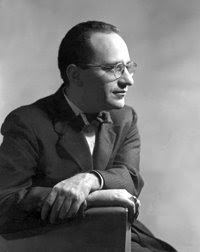
For a long time, the panic of 1819 was realtively neglected. It was actually the Austrian School of economics that first brought substantial attention to 1819. Murray Rothbard's book "The Panic of 1819" is probably the most important book written on the crisis, and it is conveniently provided in it's entirety as a pdf by the Ludwig von Mises Institute, an excellent scholarly community based in Auburn, Alabama, and dedicated to the propogation of Austrian economics. Rothbard takes a unique, and thoroughly Austrian approach to 1819: his investigation is primarily concerned with the policy reactions to the crisis, rather than the causes of the crisis itself. From what I've read of the preface and conclusion, Rothbard is quite even handed with the monetary expansionists who clamored for the suspension of specie payment in the early 1820s. Nevertheless, it's clear that he sides with then President Monroe, who resisted the expansionist pressure and relied on tight monetary policy.

A new and long-awaited book on the panic of 1819 has been published by Dr. Clyde Haulman, professor and former chair in the economics department at the College of William and Mary. Haulman's book, "Virginia and the Panic of 1819", emphasizes the origins of the crisis, with particular emphasis on Virginia. He highlights two factors that make Virginia's experience: (1.) the agricultural boom the state experienced as a result of the strong demand for food following the Napoleonic Wars, and (2.) the pivotal role that Virginia played in early westward expansion, and the land speculation that came with it. High commodity prices and land speculation created a formidable bubble that hit the Commonwealth hard when it popped in 1819.

One last note on Virginia and westward expansion. I think this is a facet of American history that few people know about but that is very very important. Did you know, for example, that Abraham Lincoln was born in Kentucky, and not Illinois? And that Lincoln's father was not born in Kentucky - he was a Virginian in the early 1800's? Can you imagine how history would have been different if Lincoln's father had stayed in Virginia - if Lincoln was a partisan for the Old Dominion? In her book, "Dominion of Memories: Jefferson, Madison, and the Decline of Virginia", Susan Dunn emphasizes this period as a huge "brain drain" on the Commonwealth. As elder statesmen such as Monroe and Madison resisted reform into the 1820s and 1830s, Virginia's best and brightest struck out for Kentucky and the Ohio country, leaving the Commonwealth in the hands of less qualified statesmen. It took a huge toll on the Virginian polity and economy.

Vernon Parington's monumental work "Main Currents in American Thought" puts a slightly rosier spin on this development. He calls Virginia "the mother of the agrarian West" (read: "the mother of the reformers and populists of what we now call the Midwest"). He also speaks of the "Virginia Renaissance", but acknowledges the slip from what he calls "middle class ideals" to "plantation ideals" during this period. Nevertheless, Parington is far more severe with South Carolina; he contrasts "Virginia humanitarianism" in the Virginia expansion into the Ohio country with "Carolina imperialism" and South Carolinians' expansion into Mississippi, Alabama, etc.

Now that I've used two paragraphs to diverge from the panic of 1819, I think it's time to end this post. Suffice it to say that westward expansion was going on long before cowboys and gold miners - and Virginia played a huge role in this process. In doing so, it reshaped itself (probably for the worse), and reshaped the nation (probably for the better). Congratulations on your new book Clyde! I've been waiting for this since I heard you were working on it my sophomore year!

Friday, August 22, 2008

Veepstakes

So the BBC is reporting that Obama's VP selection will come within hours. This is smart - it would be crazy for him to miss a day or two of press. Now, all the online news sources will have it on the front page all day, nightly news will have it tonight, and the print news sources will still have to print it front page tomorrow morning, even if the news is "old" by then. Then the convention starts and Obama will get coverage all over again.

Anyway - the other thing the BBC reports is that he says he has chosen someone who will help him to strengthen the economy. That almost certainly means no Biden, which is interesting. Probably safe too - Biden has a lot of baggage. It could definitely mean a Kaine selection. Bacon's Rebellion had a post up today talking about how Obama's economic advisor, Austan Goolsbee (I saw him speak at the Urban Institute) considers Virginia to be a model for modern economic development - a pro-market, pro-business state with a government that is still willing to make strategic investments (except for infrastructure now, it seems). That bodes well too.

But someone like Hillary Clinton - who would also strengthen him on the economy - is also not ruled out by this new announcement. I don't think she's got a snowball's chance in hell, but there has been chatter about her lately, so I have to bring it up.

The other front runner is Indiana Senator Evan Bayh. I don't know much about him, but I looked at some of his background and he has no record that I can tell on the economy.

I think this little tidbit that Obama announced makes Kaine significantly more likely as the VP choice, especially because it will be today.

The Washington Post reports that Obama has no campaign events today - nothing until his appearance in Springfield, Illinois tomorrow where he says he will appear for the first time with his VP. That means Obama spends 48 hours in Virginia, takes a much deserved Friday rest before announcing his VP and then appearing in Illinois with him or her. No visiting Indiana or Delaware in the interim. Interesting...

By the way - I checked Kaine's schedule. Unfortunately I didn't find any clues like "Appearing in Springfield Illinois with Obama"... oh well :)

Well, I've said this before folks. If this happens that means Kaine in the White House, and Webb and Warner both in the Senate. What a boon for Virginia!!!!

I should really work on and write that "Job Flows and Unemployment in the Upper Tidewater" paper... give the Obama team some more insights into Virginia's economy.

Friday, August 8, 2008

New Research 2

OK, so the second paper that's been emerging is going to be called something like "Unemployment in the Upper Tidewater: A Job Flows Approach".

Background: Northern Virginia and Southern Maryland have had impressively low unemployment rates for the last two decades or so. I've read reports in the business press (which I should really track down again for this paper) refering to the region as "recession-proof". Oft-cited reasons are government contracts and the IT boom in the region, and the explosive population growth which keeps construction and service workers employed as well. It's very insightful to look at the BLS's LAUS (local area unemployment statistics) maps. Maps for 1999 and 2000 - before the last recession - are especially instructive. Northern Virginia is one big patch of white on the map's color scale - under 2% unemployment. The largest area of land in the country that had unemployment under 2% at the time. Not far to the west, West Virginia is dark purple - one of the largest contiguous areas of high unemployment in the country.

So lots of justifications for why Northern Virginia does so well have been forthcoming - one other explanation I want to explore is the relationship between job flows and unemployment. There are two job flows that people look at: job creation, and job destruction. Job creation occurs when a firm expands its workforce. Job creation statistics are different from hiring and firing statistics. A firm of 50 employs can hire 25 employees and fire 25 employees, and they've added nothing to job creation statistics. Job destruction is just the opposite - the number of positions a company has eliminated. So job creation and job destruction tell a slightly different story from employment, hiring, firing, and unemployment statistics. Net change in employment has to equal job creation minus job destruction - but the job flow dynamics in an economy may differ from their employment dynamics.

John Haltiwanger, of the University of Maryland, has lead the way in research on job creation and destruction. In his most famous book on the subject (creatively called "Job Creation and Destruction"), Haltiwanger identifies many properites of job flows, and in one chapter explores the relationship between job flows and unemployment. The overarching conclusion is that during periods of high unemployment, job destruction spikes and job creation remains relatively constant. It sounds fairly straightforward, but it's an important finding with policy implications. The policy response to this finding would be different, for example, from the policy response if job destruction stayed relatively constant during recessions, and job creation declined significantly.

The problem with Haltiwanger's research is that he primarily looks at aggregate job flow and unemployment statistics. However, the Census's Quarterly Workforce Indicators provide county level job flow data to track whether these relationships occur at the local level. The problem is, these data are only available for certain states at certain times. Very important states - like Massachusetts, Ohio, and New York haven't even produced any. Some, like Maryland, produce the statistics as far back as 1990. So it's a crapshoot. I've been poking around each state's website to see how good their statistics are, and I've discovered that every state in the Fifth Federal Reserve District (Virginia, Maryland, West Virginia, DC, North Carolina, and South Carolina) have data going back to at least 1998 - in other words, covering the last recession.

My plan is to run Haltiwanger's basic analysis on every state in these counties, and determine whether high unemployment counties have a different relationship between job flows and unemployment than low unemployment counties in the district. In other words, does the Upper Tidewater behave just like Haltiwanger's national statistics - only with a smaller increase in job destruction - or does it show different patterns entirely? Perhaps the Upper Tidewater sees a spike of job creation and job destruction during recessions - a sort of "creative destruction" a la Schumpeter. I think it should be interesting.

If things work out, all these stats are available by industry as well.

I envision this being presented at a brown bag at work, where I'll refine it, and then submitted to a minor labor economics journal. Perhaps the Journal of Labor Research, which is published by George Mason. I want a good shot of getting in and publishing something in a journal for once - that's all. I think it's a decent idea - and it would be useful for policymakers in schizophrenic states with areas of very high and very low unemployment. Or even for whole countries where this occurs, like Belgium... in fact, I wonder if Belgium publishes gross job flow statistics....

Monday, August 4, 2008

Virginia in the News

Virginia has been in the news lately. The Washington Post is once again touting it as a battleground state in the presidential election. A new fact I was not aware of is that McCain is apparently considering Rep. Eric Cantor as his running mate. Cantor is a four term Congressman from Virginia, and (like the author of this blog) a graduate of both The College of William and Mary and George Washington University. Seems like a small fish to me - I doubt he'll get picked - but that's an interesting tidbit. It's notable that McCain isn't going near any of Virginia's bigger name Republicans - like George Allen.

Forbes magazine also reported its annual ranking of states in terms of their competitiveness. For the third year in a row Virginia ranked first, but the runners up closed the gap from last year. In fact, the first two paragraphs are dedicated to the fifth-place state - Georgia - without mentioning Virginia at all until the third paragraph! The Bacon's Rebellion blog, on my blog roll, reports on this as well.

You have to take these rankings with a grain of salt - the underlying point is that we're doing well. Lots of rankings like this exist (maybe I'll do a blog post on it some day), so you have to look at where you fall out in the distribution across several of them.

Finally, yesterday's Post reported on a number of new wind energy projects that are set to go up in the western part of Virginia over the next several years. This is very exciting, but there seems to be some opposition from... not Big Coal... not state Republicans... but ENVIRONMENTALISTS! Yes folks, wind turbines can kill birds and destroy the tranquility of the mountain forests where they will be built. Good grief. I fancy myself an environmentalist for all intents and purposes - but these people are going to have us living in caves pretty soon. An environmentalist opposing wind energy? I was dumbfounded.

Apparently Virginia passed a law in 2007 that made the state very friendly to the development of wind energy, which got a lot of firms interested in new projects. Kudos to Richmond! The article did not talk much about the state's coal options. We have a lot of coal left in Virginia, and we really need to look into how to burn it AND extract it cleanly. A lot of people scoff at the idea of "clean coal", but my understanding is there's something to it. It's certainly worth checking it out since we're sitting on so much of the stuff.

Tuesday, July 29, 2008

Principles, Agents, and Bacon's Rebellion

OK - so my recent post on Tim Kaine and Obama got me feeling like I should re-emerse myself in Virginia state politics after somewhat of a hiatus, so I looked up some Virginia policy blogs and added one - "Bacon's Rebellion" - to my list...

... and I'm already frustrated with one of the posts.

James Bowden had a post on a court decision on public prayer. It's a pretty mundane argument on his part - standard church/state stuff - except for the principle/agent dimension of the court decision that I think he's ignoring. Plus he's doing this and trying to hold himself up as a "strict constructionist" at the same time. He promotes strict constructionism in a way that distorts what most constructionists actually believe. Anyway - weel free to read my comments. I come away from this experience with two insights:

1. Every intelligent person should have an understanding of contracts and the concept of principles and agents, and

2. So-called "strict constructionists" need to understand that just because you don't come up with a phrase in your keyword search of the Constitution doesn't mean that it's unconstitutional or inconsistent with the intent of the founders. Even a restrictive, Jeffersonian interpretation of the Constitution is viable without assuming that.

Obama-Kaine

So the Washington Post is reporting today that Kaine is on Obama's short list... and Bill Kristol is suggesting it as well. As readers may know, I was strongly behind Mark Warner as a potential VP, but I think Kaine would do good as well. Kaine, like Warner, is a centrist Democrat from Virginia with a strong focus on bread and butter issues: balancing the budget, improving transportation, and investing in education. Neither are afraid to stand up to the Republican rank and file who cannot countenance any taxes (I say "rank and file" because the Republican leadership actually agreed with the Warner administration when they raised taxes). But neither pursue "pie in the sky" Democratic platforms like universal health care or same-sex marriage either. And that's not to say that I like taxes, or that I oppose same sex marriage - it's just to say that Warner and Kaine (and Webb, for that matter) take a "first thing's first" approach that is very refreshing.

As most of you probably know, Warner is set to destroy former Republican Governor Jim Gilmore in the race for John Warner's Senate seat. I eventually came around to the logic that a sure-thing Webb-Warner Senate delegation was probably better for Virginians than a toss-up VP bid. Since I've resigned myself to that logic, I'm like this Kaine idea more and more. I honestly don't think Kaine is the "strongest" VP. In many ways someone like Biden would probably be more appropriate. But he is a good leader who brings an "outside the Beltway" perspective. Moreover, I think he could be a much more forceful, charismatic leader like Warner or Webb if he had the chance - and this may be that chance. The excitment around an all-Democratic Virginia Senate delegation and a Virginian working in the White House would be overwhelming. Virginia is already leaning towards Obama in a way that they haven't for any Democratic presidential candidate for decades. I think an Obama-Kaine ticket would push it over the top.
Kaine also appeared at the Brookings Institution's "Hamilton Project" last Friday, at an event I really wanted to attend, but couldn't. The forum was on investment in infrastructure, from "bridges to broadband". I haven't listened to the recording of Kaine's talk yet, but it's encouraging to see him on a national stage with such luminaries as Larry Summers and Robert Rubin.
So who knows - we may see another Virginia Triumvirate in Washington again! I have no illusions that Kaine would have been as strong of a match as Warner or Webb in electoral terms, but I think he would be a brilliant addition to the Obama administration nonetheless. And if the Democrats take Congress this Fall (which they oughta), I can assure you that Warner and Webb will be front and center, pushing Obama's agenda through the Senate.